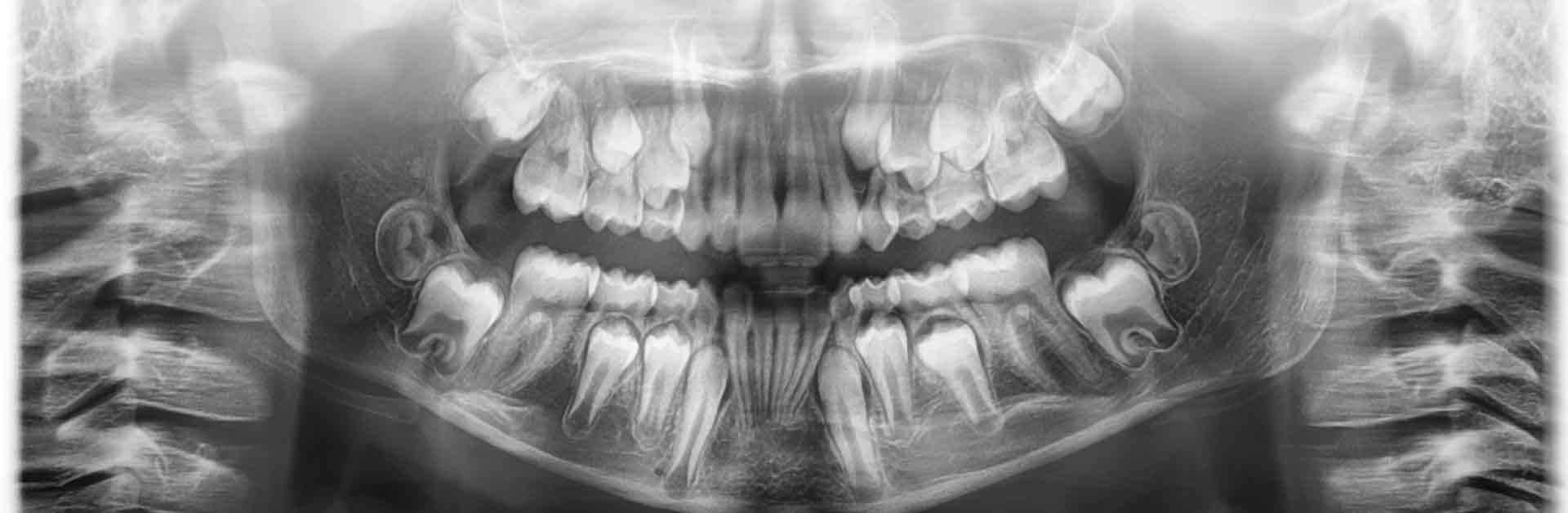
Regular dental X-rays are an important part of maintaining good oral health. They provide valuable diagnostic information that helps your dental team detect problems early and provide preventive care whenever possible.
In addition to the X-rays taken during your routine checkups, there may be times when an additional image is needed to get a more complete picture of your oral health.
What is a panoramic x-ray?
So what exactly is a panoramic X-ray, and how does it differ from the X-rays taken during a typical dental visit?
A panoramic X-ray works much like a panoramic photo taken from a mountain top—it captures a wide, comprehensive view. Instead of focusing on just a few teeth, this type of X-ray shows your entire set of teeth in a single image. It also reveals the bones that support your teeth, your full upper and lower jaw, both jaw joints, and even parts of your sinuses, skull, and upper spine.
Getting a panoramic X-ray (often called a “pano”) is quick and comfortable. Unlike traditional dental X-rays, you don’t have to bite down on small film holders. Instead, you’ll stand—or sit if needed—while resting your chin on a support and gently biting on a small positioning guide.
The machine then slowly moves around your head, capturing a complete image of your dental structures. This broad view allows your dental team to evaluate many aspects of your oral health all at once.
What’s the difference between a panoramic x ray and regular x rays?
About once a year, most patients should have routine check-up X-rays called bitewings. These are close-up images of the back teeth, which are the most common areas for cavities to develop.
A panoramic X-ray doesn’t offer the same level of fine detail as bitewings, so it isn’t ideal for spotting small cavities or early tartar buildup between teeth.
On the other hand, bitewing X-rays are limited in scope—they typically capture just one to three teeth at a time. While they can sometimes show the very top portion of the supporting bone, they don’t provide a full view of deeper bone structures or extend far enough back to evaluate the jaw joints.

Why do kids need a panoramic x ray?
Children’s teeth develop largely out of sight, tucked beneath the baby teeth and surrounding bone. Because of that, potential concerns can also stay hidden. Panoramic X-rays for children allow us to see how permanent teeth are forming, confirm that all expected teeth are present, and identify certain alignment or developmental issues early—before they become more complex to manage.
If you’ve never seen a child’s panoramic X-ray before, it can look a little overwhelming at first glance.
But while it may seem chaotic, these images actually provide a wealth of important information. We can see how the permanent teeth are developing, confirm that all expected teeth are present, and look for any early signs of potential concerns. We can also evaluate how the jawbone and jaw joints are growing and developing.
In addition, a panoramic X-ray helps guide timing for orthodontic care by allowing us to determine when it may be appropriate to schedule a consultation with an orthodontist.
When should my child get a panoramic x ray?
According to a study published in the International Journal of Paediatric Dentistry, developmental dental anomalies—meaning variations in the shape, position, size, or structure of the teeth and jaws—can be effectively identified in children using panoramic X-rays.
In general, children may benefit from panoramic imaging around ages 7, 12, and 16, as these are important stages in the development of the teeth, jaws, and supporting structures. For instance, a panoramic X-ray taken around age 16 allows us to evaluate the developing wisdom teeth and plan the most conservative and appropriate next steps if needed.
Panoramic X-rays for children allow us to see how permanent teeth are forming, confirm that all expected teeth are present, and identify certain alignment or developmental issues early—before they become more complex to manage.
If you have any other questions and/or would like to schedule an appointment for your child for a panoramic x-ray, click here or call us: 702-586-4347
Call us and schedule your child’s appointment today: (702)586-4347
Pacifier Use and Thumb Sucking
Pacifier Use, Thumb Sucking and Finger sucking What can happen...
Read MoreDental care for you and your baby
Dental care for you and your baby Congratulations on the...
Read MoreShould I be concerned if my child has Bad Breath?
Should I be concerned if my child has Bad Breath?...
Read MoreSpecial Needs Dentistry for kids
Special Needs Dentistry for kids Looking for special needs dentistry...
Read More